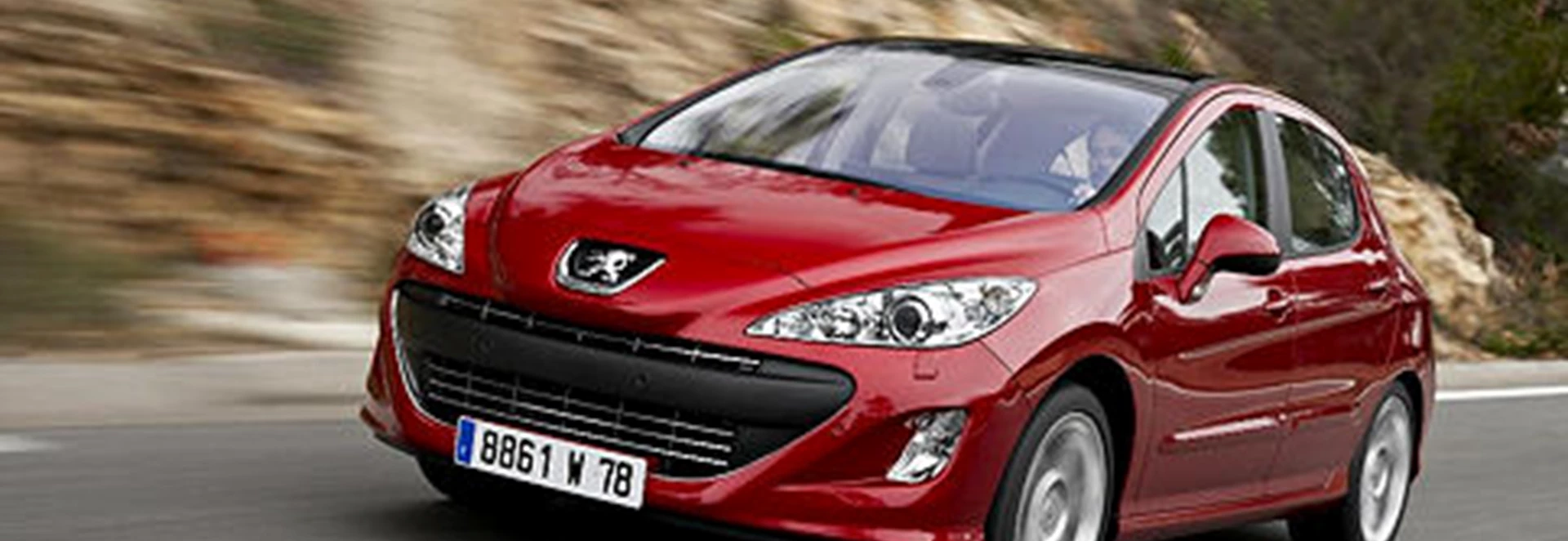
Peugeot 308 GT THP 175 review
by David Finlay (2 June 2008)

The hottest car Peugeot currently builds is the 207 GTi THP 175 (see road test), but if you want something slightly more grown-up then this may be the one for you. Despite its slightly more modest name - GT rather than GTi - the 308 has exactly the same engine as the 207, namely the 175bhp version of the 1.6-litre petrol turbo co-developed by PSA Peugeot Citroen and BMW, and also found in the MINI Cooper S.
The historical precedent for the 308 GT is quite promising. Back in the days of the renowned 205 GTi, Peugeot created a 309 (the next size of car up) in GTi form, and although nobody talks about it much these days I thought it was the more interesting of the two. It had eight more valves and significantly more power, and as far as I was concerned it handled better and was more fun to drive.
Today the situation is slightly different, and that's partly because I don't think we are in a golden era of Peugeot hot hatches. The company builds excellent cars further down the 207 and 308 ranges, and the larger 407 and 607 are both elegant and classy. It's when Peugeot gives its smaller cars power outputs of 150bhp or more that things start to go wrong.
My main complaint about the 207 GTi THP 175 is that it's too stiff. The 205 GTi was like that too, but at least it was manageable, so long as you were aware of what it was doing. The 207 ricochets off bumps in the road rather than absorbing them, and as a result it simply isn't as capable as it should be.
The 308 GT has the opposite problem. When it encounters a bump it has very little idea of what to do next, and there's a period of recovery during which you have to wait for everything to settle down when ideally you would be getting ready to tackle the next few yards of tarmac.
This is because of a curious suspension mismatch. The springs spring but the dampers do not damp, or at least not sufficiently, and that period of uncertainty is caused by the springs unspringing at their own pace when the shock absorbers should be doing the job for them. And so we have a 207 which is too harsh and a 308 which is too vague, with a large gap in the middle where two ideal Peugeot hot hatches should be.
At least there's no question about the 308's straightline performance. It has a slightly quicker top speed than the 207, no doubt due to superior aerodynamics, and although the 0-62mph time is 1.2 seconds slower at 8.3 seconds, that's still not exactly hanging about. The turbocharger may have taken all the fun out of the way the engine sounds, and led to a much lower rev limit than that of previous screaming Peugeots, but you can't deny that it's quick.
Well-equipped, too. On top of the specification of the 308 SE, the GT gets 18" alloy wheels, half-leather sports seats, carpet mats, tyre pressure sensors, an alarm, xenon headlights and a Bluetooth phone kit as standard. On top of that, the test car has metallic paint, Peugeot's RT4 multimedia system (with colour satellite navigation, a GSM phone in place of the Bluetooth kit and MP3 music storage) and JBL audio, which in combination added £2050 to the £18,995 price tag.
That price refers to the three-door tested here. For an extra £600 you can have five doors (as shown in the pictures), and that would be a wise choice, because although rear visibility isn't up to much in the five-door it's a lot better than what you get in the three-door, with its ridiculously small rear side windows. The single saving grace in this respect is the rear parking sensor which takes some of the guesswork out of reversing and is also standard on the GT.
In small doses the most powerful 308 is quite fun, but it has too many compromises. It's also not nearly as enjoyable to drive as some cheaper, slower cars in the same range, and that can't be right, surely?


Add new comment